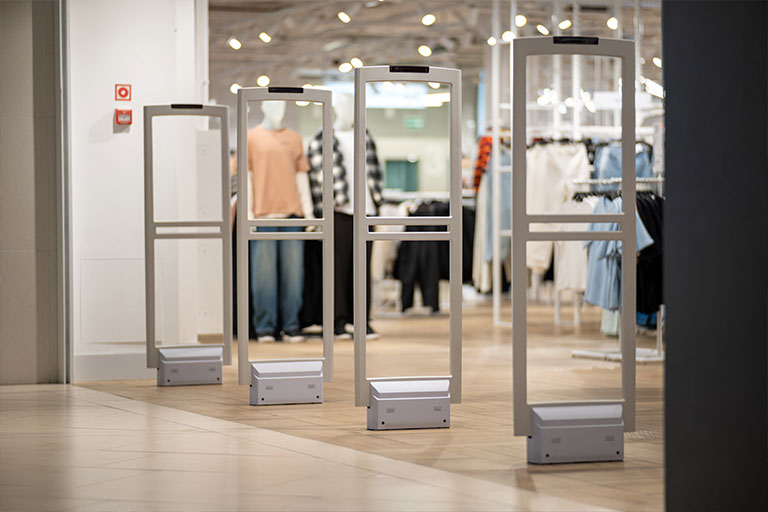
Sadly, increased security measures are a reality for most South Africans. For individuals, securing their homes typically involves an alarm system, some fixed cameras, and perhaps a contract with an armed response service. However, for businesses, the security challenge is much more complex. They need to manage perimeter security, control access to sensitive areas, and ensure rapid response times during incidents.
Electronic security is an important part of that picture.
Globerisk designs electronic security solutions around the environment, its risks and the way the site operates. The team remains brand-agnostic when specifying equipment, selecting systems based on each installation’s requirements. Where appropriate, Globerisk does work with technologies it knows well and has tested in South African conditions, including solutions from ArxTech and Hikvision.
The perimeter typically serves as the initial point for illegal intrusions. Detecting suspicious activity early allows security teams to investigate before the threat reaches the main buildings. Globerisk’s solutions include electric fencing (which acts as a physical barrier), while fibre-optic perimeter detection provides another layer of protection.
Official access points, such as boom gates and turnstiles, regulate entry at specific locations. Here, access control becomes more than a physical barrier, providing the means to verify identity and manage access in accordance with site requirements.
Access control systems can be configured for a single entrance or a complex property with multiple access points and restricted areas. Biometric access verifies identity through a range of methods including fingerprints, facial recognition, or iris scanning, making it particularly useful in high-security areas. Facial recognition can also connect identity verification with video surveillance, allowing recognised individuals and access events to be flagged and recorded for later review.
Outside visitors require consideration too. Electronic visitor management allows identities to be verified digitally and access to be managed in accordance with site protocols, while maintaining a record that can be retrieved when required. Security intercoms provide an additional verification step at entrances, allowing personnel to communicate with visitors before granting access
Seeing what is happening
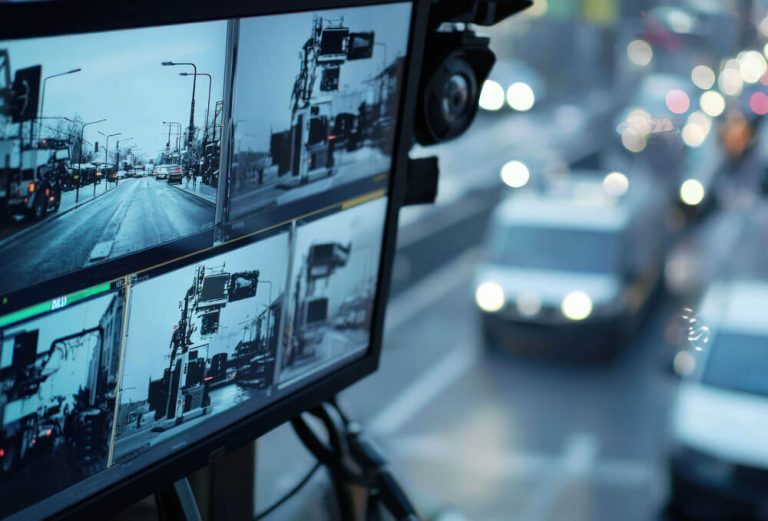
CCTV has been part of South African security for decades. Modern video surveillance can now provide integrated, continuous oversight of large or complex sites. Networked cameras allow footage to be viewed remotely, while Network Video Recorders provide centralised recording and playback. IP video networks also allow systems to scale as a site develops, supporting remote access and distributing footage across the network.
More recently, video analytics add another layer of capability. AI-powered systems can analyse live or recorded footage to identify people and vehicles, detect specific activity and support functions such as facial recognition and people counting. Hikvision, for example, offers AI-enabled camera and NVR technologies designed to distinguish people and vehicles from other movement.
This allows security personnel to focus their attention on activity that requires investigation rather than on continuously monitoring every camera.
Making the systems work together
The value of electronic security increases when the different systems are designed as part of the same operation. A perimeter sensor can identify an event and its location, while the associated camera provides visual information. Monitoring personnel can then review the footage and determine whether physical intervention from on-site guards is required.
The same principle applies to access events. An attempt to enter a restricted area can generate an alert, with the relevant camera providing additional context.
Achieving this level of integration requires careful planning. A site assessment (one of Globerisk’s core services) helps determine where detection is needed and how the various systems should communicate. Equipment is then selected and configured to meet the security requirements of that environment.
Technology still needs people
Electronic security can detect an event within seconds and provide information that would otherwise be difficult to obtain. However, trained personnel are essential for responding wisely and appropriately.
Globerisk’s security guarding services provide the physical security component to a premises, with personnel selected and trained according to the requirements of each environment. Electronic systems give these teams greater visibility and information.
Secondly, Globerisk’s Intelligent Control Room, provides 24/7 oversight of connected security systems and the infrastructure supporting them. Its capabilities extend beyond traditional CCTV surveillance and alarm monitoring, with oversight of equipment stability, power supply and communications. This is particularly relevant in South Africa.
Explore Globerisk’s electronic security solutions further or contact us to discuss your site’s security requirements.